
Prior to the arrival of Europeans in what is now central Alberta, the region was home to the Cree, Nakota, and Métis Nations, who occupied and used the region for thousands of years through hunting, trade, and seasonal movement. The North Saskatchewan River served as a primary route of travel and exchange, with communities moving along it by canoe.
The area that would later become Fort Saskatchewan was an important stopping point along this route. Near the mouth of the Sturgeon River, Indigenous peoples gathered materials needed to build canoes. Due to the abundance of birch bark used in canoe construction, the area was known as Waskwayâhtik Ispatinaw (Birch Hills).
Fur-trade routes passed through the region as early as the 1790s, establishing the area as an early centre of trade and movement. In 1872, the Lamoureux brothers established a settlement across the river from present-day Fort Saskatchewan, operating a ferry service across the North Saskatchewan River that continued until 1906.
The arrival of the North-West Mounted Police in 1874, who established the Sturgeon Creek Post (renamed Fort on the Saskatchewan in 1875), further increased the area’s prominence. Settlement expanded throughout the region, with homesteaders arriving in Lamont County in 1887, followed by German farmers settling in the Bruderheim area in 1888.
Large numbers of settlers from Galicia and Bukovyna later arrived in east central Alberta, with some of the earliest homesteads established near present-day Star. By 1914, Ukrainian settlement in the region covered approximately 2,500 square miles, and by 1930 more than 50,000 people of Ukrainian descent lived in the area, making it the largest Ukrainian settlement outside of Ukraine.
Fort Saskatchewan was incorporated as a village in 1899 and became a town in 1904, with a population of approximately 600. That same year, on January 25, 17 local businessmen established the Fort Saskatchewan Board of Trade to guide the community’s economic development.
This organization was enabled by federal legislation passed in 1874 authorizing the incorporation of Boards of Trade across the Dominion. In its early years, the Board of Trade played an influential role in shaping Fort Saskatchewan, involving itself in community planning, infrastructure, and governance.
The arrival of the railroad in 1905 improved access to markets and encouraged settlement, but population growth remained modest until the mid-20th century. Significant change came in the 1950s with the arrival of major industry, most notably Sherritt Gordon Mines in 1954.
As industrial development expanded and employment opportunities increased, the Board of Trade evolved into the Fort Saskatchewan Chamber of Commerce. Continued growth led to Fort Saskatchewan’s incorporation as a city in 1985.
By 1980, the Chamber required its own dedicated office space. Space was leased in downtown Fort Saskatchewan, and a part-time administrator was hired, marking a shift toward a more formal and professional organization.
Lamont County has a distinct cultural history and in 2018 proclaimed itself the “Cradle of Ukrainian Settlement in Canada,” recognizing the lasting influence of early settlers in the region.
In 2021, the Fort Saskatchewan and Lamont Chambers of Commerce merged, reflecting shared economic interests and an increasingly interconnected business community. In 2022, the organization was renamed the Fort Saskatchewan & Lamont Regional Chamber of Commerce.
Today, the Chamber continues a tradition spanning more than a century, supporting local businesses, advocating for economic development, and strengthening the Fort Saskatchewan and Lamont County business communities.
References:
- Athabasca Landing Trail - http://www.athabascalandingtrail.com/lamoureux.html
- Elk Island National Park - https://www.pc.gc.ca/en/pn-np/ab/elkisland/culture/chrono
- Fort Heritage Precinct - https://fortheritageprecinct.ca/
- Lamont County - https://www.lamontcounty.ca/visitors/county-history
- Prairie Towns - http://www.prairie-towns.com/bruderheim-images.html
Canadian History EHX https://canadaehx.com/2021/03/17/the-history-of-fort-saskatchewan/
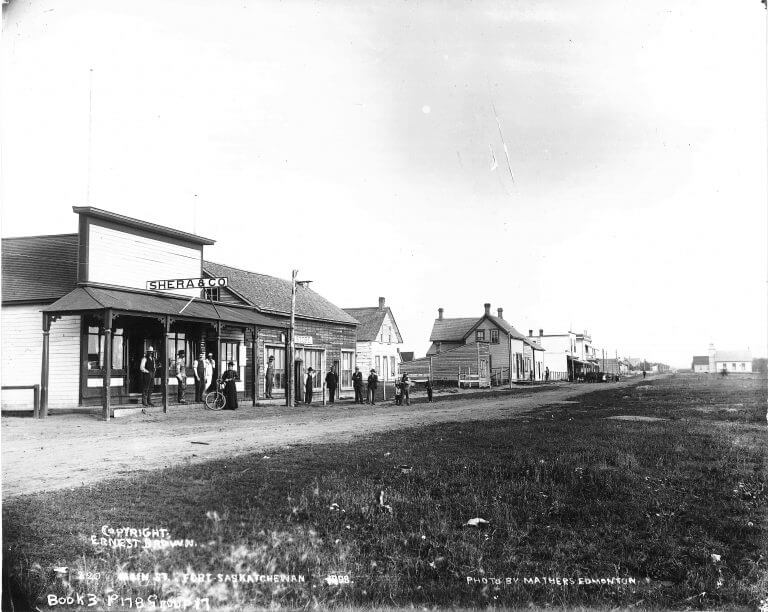
Mainstreet Fort Saskatchewan (c. 1898)
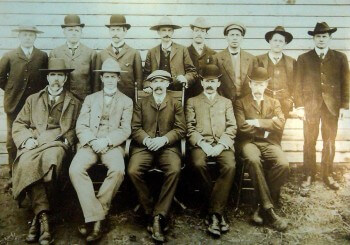
Founding Members of the Fort Saskatchewan Board of Trade (c. 1904)

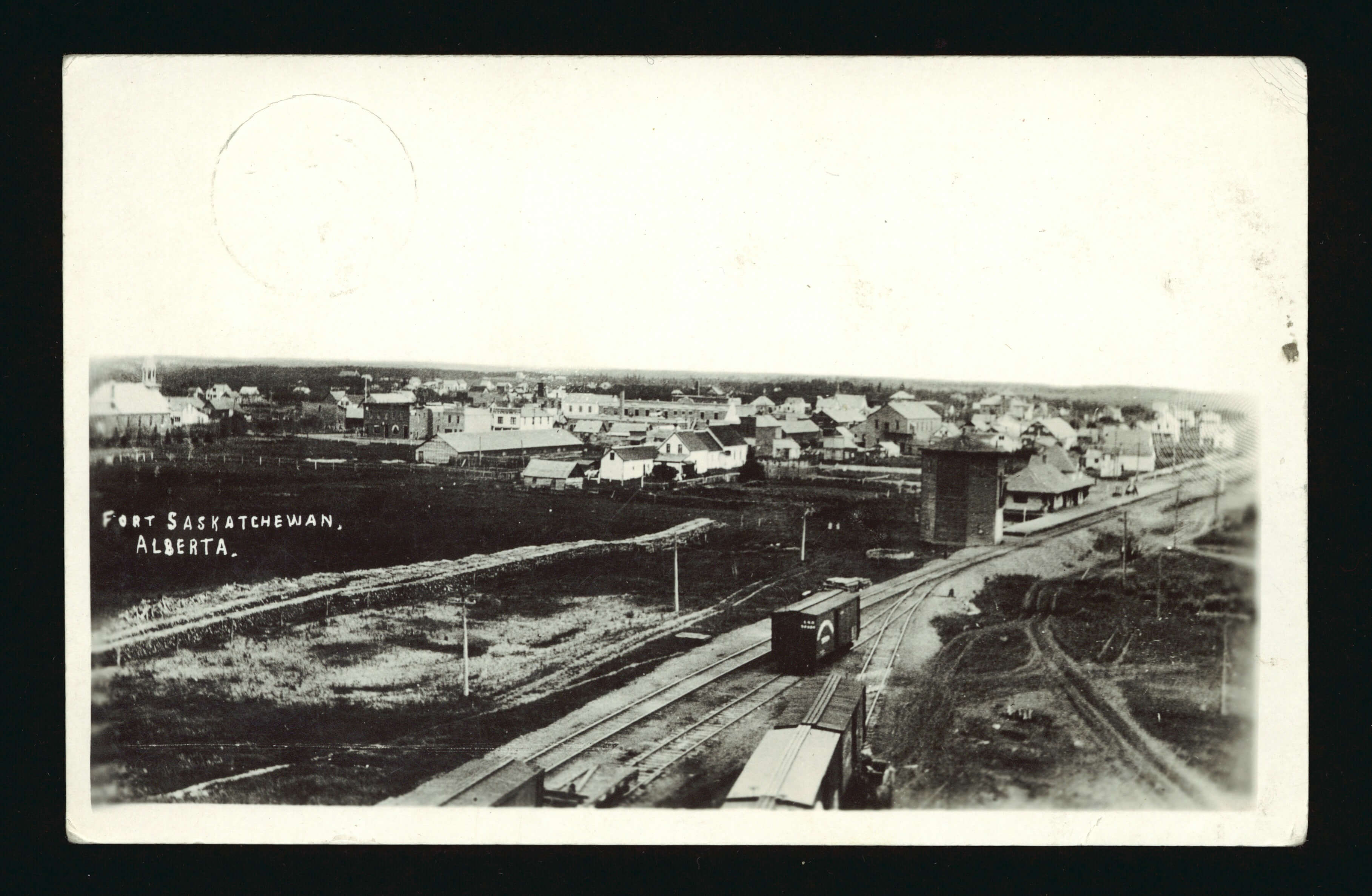
View of CNR train leaving Fort Saskatchewan (c. 1916)
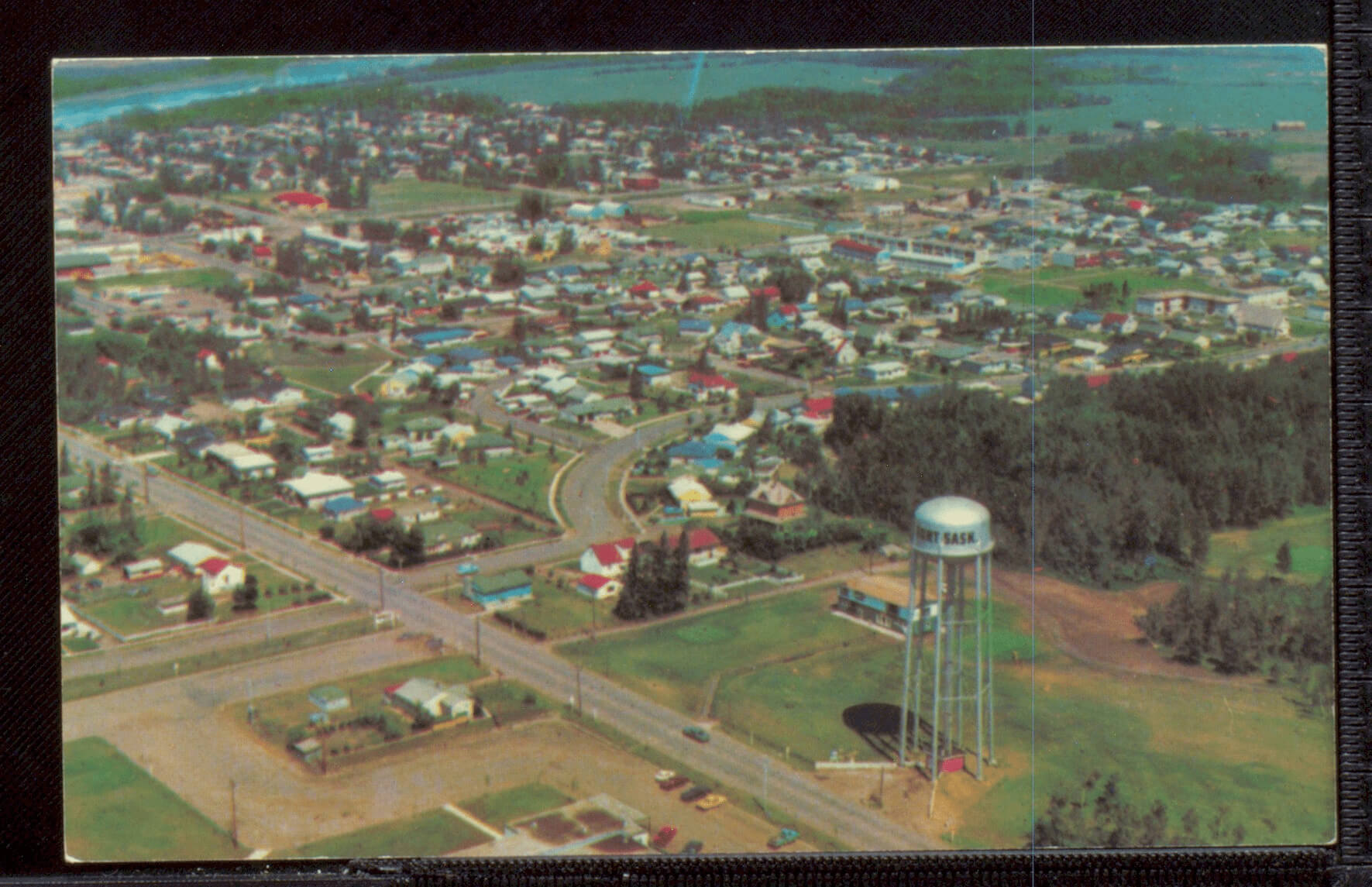
Aerial Postcard of Fort Saskatchewan (c. 1972)